How to Clean Your Teeth Properly With Braces: A Complete Guide
Dr. Nikhil Julian
July 30, 2026
How to brush teeth with braces is something every braces wearer should learn early. Braces help straighten your teeth, but they also create extra spaces where food and plaque can get trapped. That makes oral hygiene more important than ever. Without proper cleaning, braces can increase the risk of cavities, gum problems, and tooth staining. Here’s how to keep your teeth and braces clean throughout your treatment.
Why Oral Hygiene Matters More With Braces
Brackets and wires make it easier for food particles and plaque to build up.
Poor cleaning can lead to:
Tooth decay
Gum inflammation
Bad breath
White spots on teeth after braces are removed
Keeping your braces clean protects both your teeth and your treatment progress.
Step 1: Rinse Before Brushing
Start by rinsing your mouth with water. This helps loosen food particles stuck around brackets and wires.
Tip: A quick rinse after every meal can help reduce buildup.
Step 2: Use the Right Toothbrush
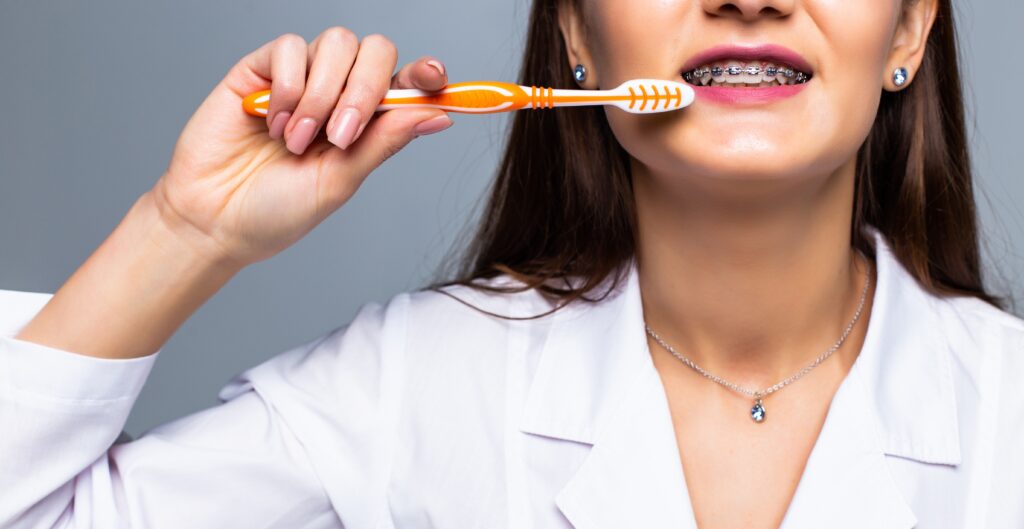
Choose a soft-bristled toothbrush or an electric toothbrush.
When brushing:
Hold the brush at a 45-degree angle
Clean above and below the brackets
Brush each tooth individually
Spend at least 2 minutes brushing
Brush at least twice a day, ideally after every meal.
Step 3: Use Interdental Brushes
Interdental brushes are small brushes designed to clean between brackets and under wires.
They help remove:
Food debris
Plaque in hard-to-reach areas
These are one of the most useful tools for braces care.
Step 4: Floss Using Floss Threaders
Flossing with braces takes extra effort, but it’s essential.
A floss threader helps guide floss under the wire so you can clean between teeth properly.
Tip: Floss at least once a day to prevent gum problems.
Step 5: Use Mouthwash
An antibacterial or fluoride mouthwash helps reach areas your toothbrush may miss.
Benefits:
Reduces bacteria
Strengthens enamel
Freshens breath
Use it after brushing and flossing for best results.
Foods That Make Cleaning Harder
Some foods stick easily to braces and make cleaning difficult.
Try to avoid:
Sticky candy
Chewing gum
Hard snacks
Sugary foods
These can increase plaque buildup and damage brackets.
Common Mistakes to Avoid
Avoid these habits:
Brushing too quickly
Skipping flossing
Ignoring gumline cleaning
Not cleaning after meals
Consistency matters more than brushing aggressively.
Signs Your Braces Need Better Cleaning
Watch out for:
Bleeding gums
Bad breath
Plaque around brackets
Swollen gums
Tooth discoloration
If you notice these, improve your cleaning routine and consult your dentist.
FAQ Section
How many times should I brush my teeth with braces?
Ideally after every meal, but at least twice a day.
Can I use an electric toothbrush with braces?
Yes, electric toothbrushes can be very effective for cleaning around brackets.
Are interdental brushes necessary?
They’re highly recommended because they clean areas regular brushes can miss.
Is mouthwash enough instead of flossing?
No. Mouthwash helps, but it doesn’t replace flossing.